


Rugged PDAs vs Rugged Tablets: Which Is Right for Your Workforce?
Rugged PDAs and rugged tablets both have a place on the warehouse floor — but they serve very different needs. Here's an honest look at where each device excels and where it falls short.
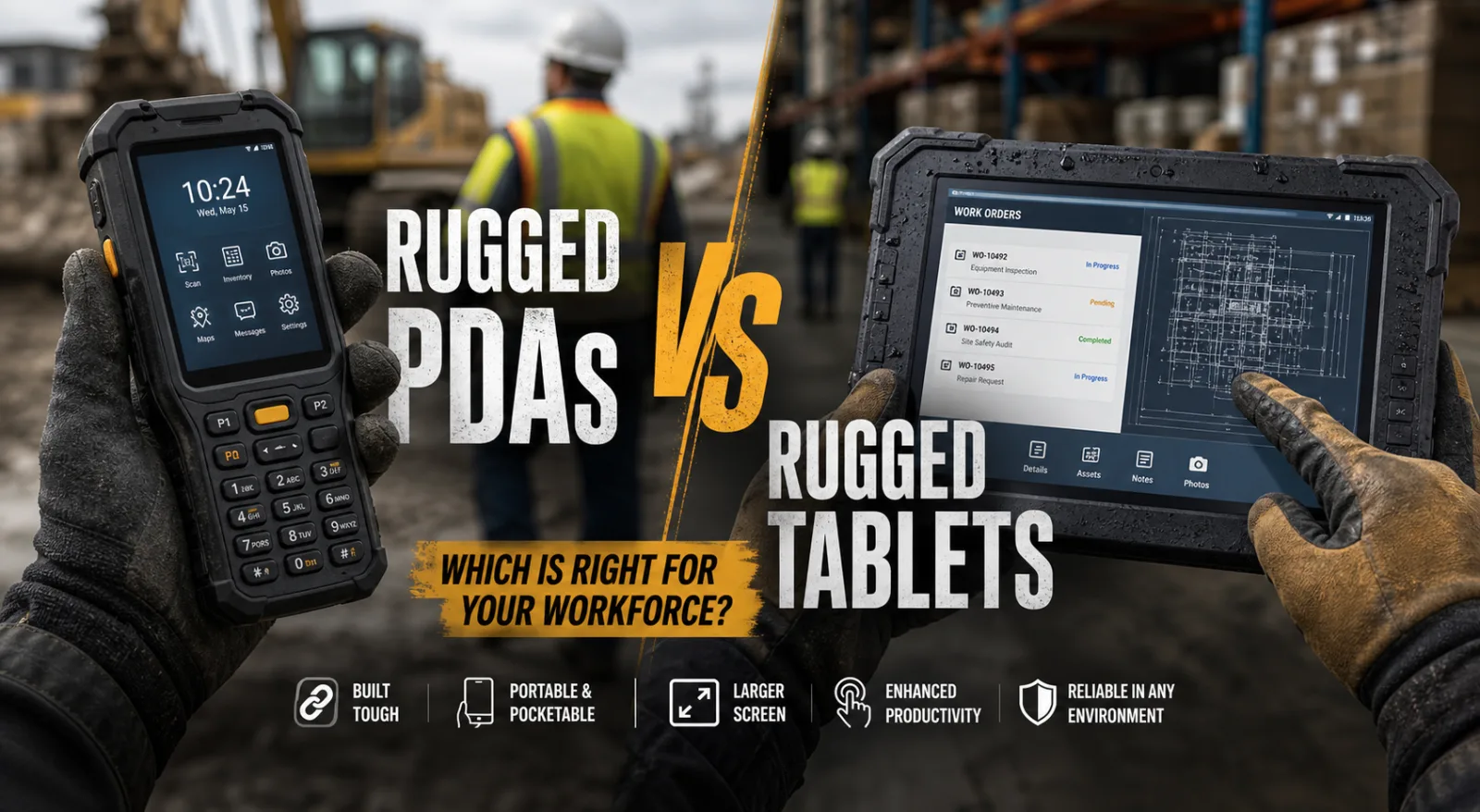
When equipping a mobile workforce with rugged hardware, one of the most common questions we hear is: should we go with a rugged PDA or a rugged tablet? Both are built to survive drops, dust, and demanding environments — but the similarities can mask some meaningful differences that affect day-to-day productivity.
What Is a Rugged PDA?
A rugged PDA (Personal Digital Assistant) is a compact, handheld device purpose-built for specific operational tasks. Think warehouse picking, retail stock checks, field service logging, or parcel scanning. They typically feature a smaller screen — often in the 3- to 5-inch range — and are engineered around a single primary function, most commonly integrated barcode scanning.
The Case for Rugged PDAs
For high-volume, task-specific workflows, rugged PDAs offer some genuine advantages:
- Dedicated barcode scanning — Built-in scan engines (laser or imager) in rugged PDAs are purpose-designed for fast, accurate scanning, often outperforming camera-based scanning on a tablet, particularly in low light or with damaged barcodes.
- Compact and lightweight — Smaller form factor means workers can carry and operate them single-handed for extended shifts without fatigue. This matters enormously on a busy warehouse floor or during long delivery rounds.
- Faster task completion — Because the interface and hardware are optimised for one job, there's less navigating between apps or screens. Workers scan, confirm, and move on.
- Lower per-unit cost — For large fleet deployments where every device does the same job, rugged PDAs can offer a cost-effective entry point.
Where Rugged PDAs Fall Short
The same qualities that make rugged PDAs efficient for simple tasks become limitations when the work grows more complex:
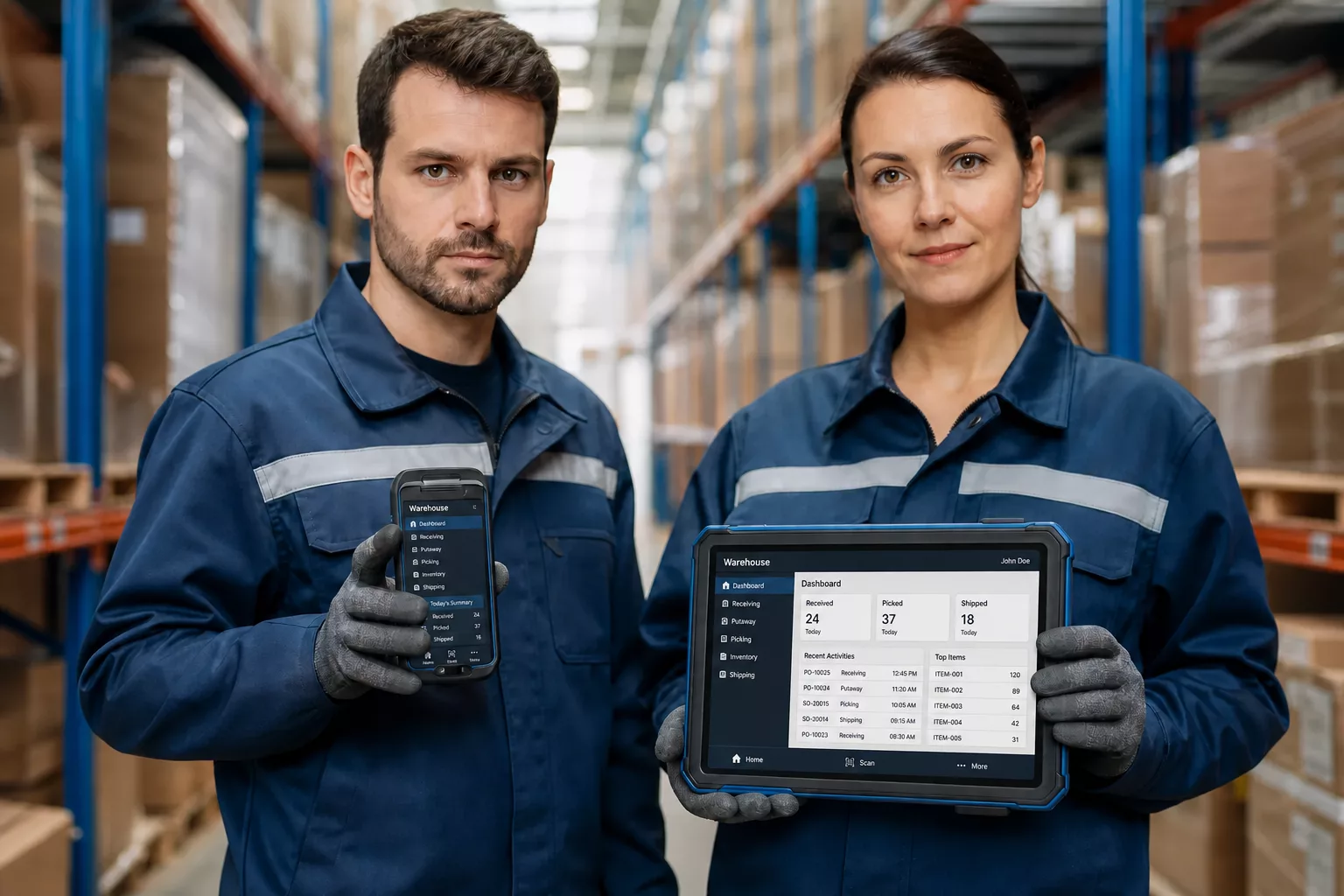
- Small screen size — Viewing detailed schematics, completing multi-field forms, referencing technical documentation, or running richer enterprise applications becomes genuinely uncomfortable — and in some cases, impractical — on a 4-inch display.
- Limited versatility — A rugged PDA is difficult to repurpose if operational requirements change. Tablets offer a broader software ecosystem and more flexibility as workflows evolve.
- Reduced processing capability — Many rugged PDAs run leaner hardware suited to lightweight applications. When businesses need real-time data, video, or more demanding software, processing headroom matters.
- Smaller battery capacity — Compact form factors often mean smaller batteries, which can be a concern for workers on extended shifts without access to charging stations.
When a Rugged Tablet Makes More Sense
Rugged tablets are the right call when tasks demand more information on screen at once, richer applications, or when a device needs to serve multiple roles across a team. A field engineer diagnosing equipment, a healthcare professional reviewing patient records, or a retail supervisor managing stock and customer queries simultaneously — these are tablet scenarios.
For businesses looking at rugged Android tablets, the BOSH BG-B116Z-P996 is worth serious consideration. With a 10.95-inch display, octa-core processor, and a substantial 20,000mAh battery, it's engineered to handle demanding environments without compromising on screen real estate or runtime — making it well-suited to complex, data-rich tasks in the field.
The Bottom Line
There's no universal winner here. Rugged PDAs win on simplicity, speed, and ergonomics for single-function tasks — particularly high-volume barcode scanning. Rugged tablets win on versatility, screen size, and capability when tasks are more complex or varied.
The smartest deployments often use both: PDAs for the shop floor, tablets for supervisors and field technicians. If you're unsure which configuration suits your operation, our team at BOSH Group is happy to help you work through it.